
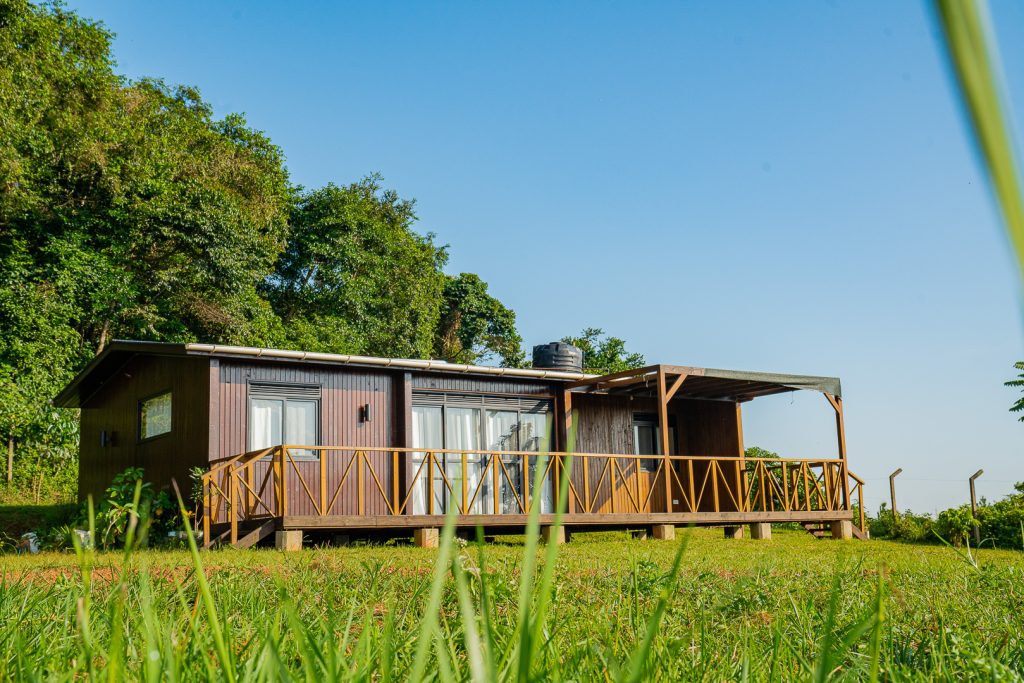
Forests play a vital role in combating climate change by acting as carbon sinks. Trees absorb carbon dioxide from the atmosphere and store it within their woody biomass. This amazing natural process becomes even more beneficial when we utilize wood in construction.
Wood as a carbon capture champion
Did you know that roughly half (by dry weight) of wood is carbon? This means using wood in buildings offers a significant advantage: it stores carbon that would otherwise be released back into the atmosphere. Throughout a building’s lifespan, the wood continues to hold onto this captured carbon, significantly minimizing the structure’s overall carbon footprint.
Studies show that when we consider both the embodied carbon (emissions released during production) and the stored carbon, many wood products have a negative CO₂ equivalent value, especially if sourced from forests with stable or increasing carbon stocks. This means that using wood actually removes more carbon from the atmosphere than it takes to produce the building materials.
Wood vs. Steel and Concrete
Building with wood isn’t just good for the environment; it’s also energy-efficient. Manufacturing lumber produces the least amount of carbon emissions amongst primary structural materials. At only 33kg of net carbon emissions per ton of production, it’s far superior to recycled steel (220kg), concrete (265kg), and virgin steel (a whopping 694 kg).
Research from Oregon State University highlights the dramatic impact of using wood. They found that substituting wood for concrete and steel in commercial buildings can cut greenhouse gas emissions by an average of 60%. This impressive reduction is a direct result of the carbon storage capabilities of wood.
How then does sustainable forestry fit in this puzzle?
While harvesting trees for construction temporarily reduces carbon storage in forests, it’s important to remember that forests can regrow. Young, vigorous trees actually sequester carbon at a faster rate. Through sustainable forestry practices, a cycle of harvesting and replanting trees maintains the forest’s ability to act as a vital carbon sink while providing a renewable source of building materials.
Building with wood is a smart choice for a more sustainable future. It reduces carbon emissions, minimizes the environmental impact of construction, and utilizes a naturally renewable resource.
How can we make this more possible?